
When planning a move, most people assume movers will take everything in their home. That is usually not the case. Every moving company follows a list of items they are not allowed to transport. These rules exist due to safety, legal, and insurance reasons.
In a city like Boston, these restrictions become even more important. This is because moves often happen in tight spaces and on strict schedules. If you are finding out about them on moving day, your move will definitely slow down.
Items Movers Usually Won’t Take and What to Do Instead
These are some common items and the reasons why Boston movers refuse to transport them:
| Item | Why Movers Leave It Behind | Better Option |
|---|---|---|
| Gas, propane, fuel cans | Fire risk inside the truck | Use it up or drop it at a hazardous waste site |
| Cleaning liquids, open bottles | Spills damage other items | Carry small amounts yourself |
| Fresh or frozen food | Spoils quickly during transit | Eat, donate, or discard |
| Houseplants | Soil spills and heat damage | Move them in your own car |
| Pets or animals | Unsafe truck conditions | Arrange separate transport |
| Firearms and ammunition | Legal and safety restrictions | Follow legal transport rules |
| Cash, documents, jewelry | Limited insurance coverage | Keep these with you |
Let’s take a detailed look at why these items cannot be carried by your movers:
1. Flammable Items
Movers do not take items that can start a fire or cause a leak inside the truck. A moving truck heats up quickly, especially during summer moves. When that happens, even sealed containers can become a problem.
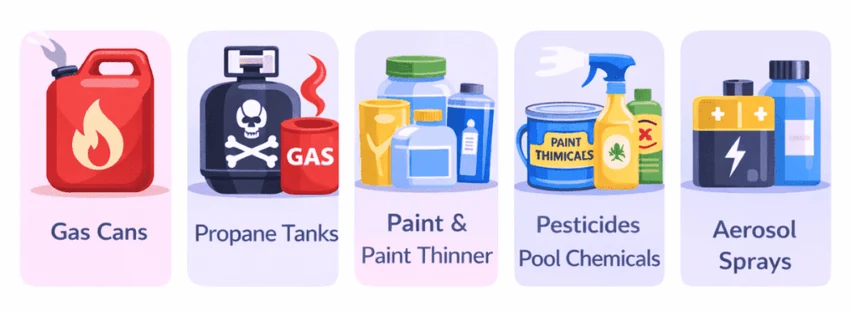
Items like gas cans, propane tanks, paint, paint thinner, pesticides, and pool chemicals fall into this category. Aerosol sprays and some batteries are also included.
If movers see these items during the move, they will not load them. It is not a judgment call and not something they can bend. In some cases, the move may pause while the items are removed from the area.
2. Open Containers or Liquid Items
The majority of movers do not move open or partially sealed liquids. Bottles can tip over during transit, and small leaks can spread quickly inside packed boxes.
This applies to cleaning supplies, cooking oils, drinks, liquid detergents, and personal care products. Even items that look harmless can cause damage if they spill.
3. Perishable Food
Movers will not transport perishable food. Dairy, frozen items, and cooked meals spoil quickly during a move. Spoiled food can leak, smell, and attract pests.

The main reason is that moving trucks are not temperature-controlled, especially in summer. Because of this risk, movers refuse these items.
Non-perishable food may be allowed in some cases, but it is often easier to transport it yourself.
4. Plants
Most moving companies do not move live plants because they can spill soil, carry insects, or get damaged during transport. They also do not do well in dark, hot trucks with limited airflow.
For long-distance moves, plants may also be restricted by state or agricultural rules.
Some local moves allow plants if arranged in advance, but many movers still prefer not to transport them.
5. Pets and Other Living Things
Pets like dogs, cats, and birds (and even fish) are not supposed to move along with the non-living things. They need a controlled environment, and moving trucks have no ventilation at all.
This is the main reason movers refuse to transport living beings.
You can hire experts to move pets who plan everything according to the season and temperature.
6. Firearms, Ammunition, and Explosives
Firearms, ammunition, fireworks, and similar items are not transported by most moving companies. These items are tightly regulated and pose serious safety risks.
7. Valuables and Important Documents
Some items are not prohibited, but movers strongly recommend keeping them with you. These include cash, jewelry, passports, legal documents, financial records, family photos, and small electronics.

Moving insurance typically covers items by weight, not actual value. If something is lost or damaged, compensation may be limited.
For this reason, movers advise clients to handle these items personally.
Items That May Require Advance Approval
Certain items are not automatically refused, but movers may not take them unless they are informed ahead of time. These items can become safety risks if not prepared correctly.
Examples include alcohol, pressurized tanks, motorized equipment with fuel, and large lithium batteries. Without notice, movers may decline them on moving day.
Talking about these items early helps avoid delays.
Why Do Boston Movers Follow These Rules?
These rules exist because moving trucks run through closed spaces carrying many items at once. When something leaks, breaks, or reacts, it affects everything around it. Movers have seen how small mistakes turn into big problems during a move.
If a restricted item causes damage or an accident, the movers may not be covered by insurance. That is a risk they cannot take, even if the item seems harmless.
For this reason, movers stick to these rules every time. It keeps the crew safe and prevents avoidable damage to your belongings.
Final Words
Most items in your home can be moved without any issue. A few items simply need to be handled differently. Hazardous materials, food that can spoil, plants, pets, weapons, and valuables usually fall into that category.
Knowing this ahead of time helps you pack with fewer surprises. It also prevents moving day from being delayed by items that cannot go on the truck.
If you are unsure about anything, ask your moving company before moving day to avoid problems. A little planning makes the entire move feel more organized and less stressful.


