
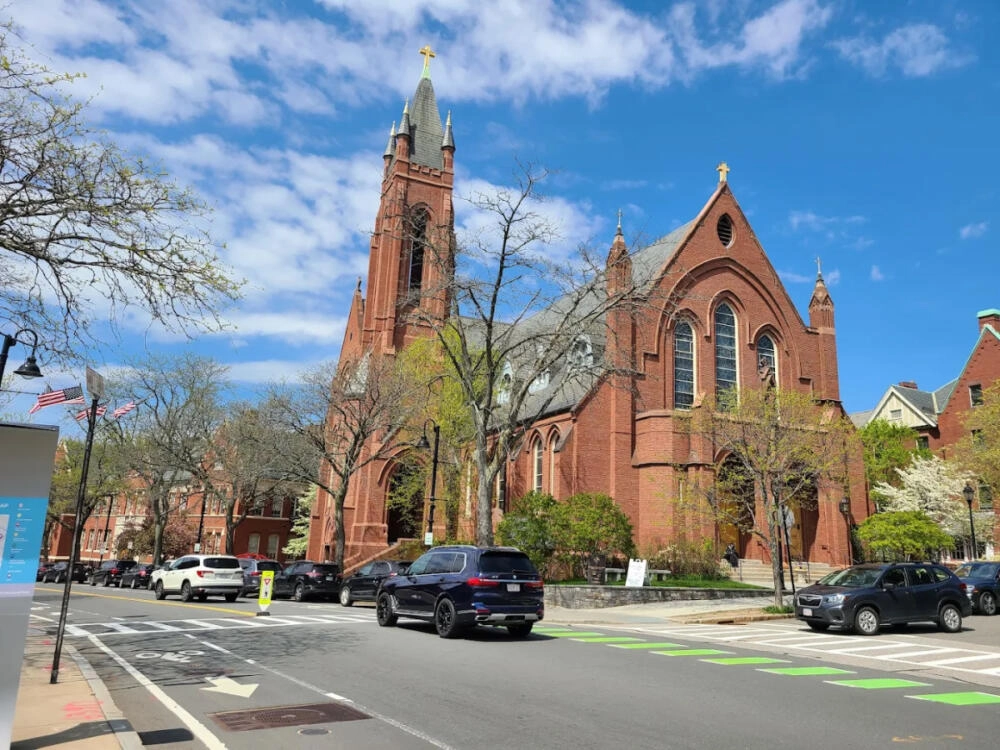
If you are planning to move to Brookline, MA, you will have plenty of questions. From how accessible it is to the cost of living and even what public transportation looks like, there are hundreds of questions that will go through your head.
Adding to all this is another major concern – moving to a new place all by yourself. Of course, Brookline has its pros and cons, but knowing what to expect before you move will save you from surprises.
In this guide, we have broken down all the key details, including living costs, transportation, and moving tips, to ensure your final moving day is less chaotic and more exciting.
Cost of Living in Brookline 2026
The cost of living in Brookline, MA, is 79% higher than the national average, with grocery prices 3% higher and utility costs 54% higher.
Data from Livability also shares that the median household income in Brookline is approximately $144,602. Keeping this in mind, here are the average costs of living and expenses in Brookline as of 2026:
| Category | Cost (Per Month) |
|---|---|
| Median Home Price | $1,816,485 |
| Energy Bill | $339.00 |
| Gas | $3.21 / gallon |
| Gallon of Milk | $4.89 |
| Carton of Eggs | $4.83 |
| Doctor's Visit | $206.13 |
| Dentist Visit | $165.58 |
Housing Options & Rent in Brookline
Different studies show different rent prices. However, the collective average rent in Brookline, MA, is between $2,871 and $4,350. PayScale also states that housing in Brookline is 240% higher than the national average.
The exact rent depends on the room size and the area you are staying in. For example, areas like Brookline Village and Coolidge Corner tend to have slightly higher rents for apartments in Brookline, MA, compared to Fisher Hill or Aspinwall Hill.
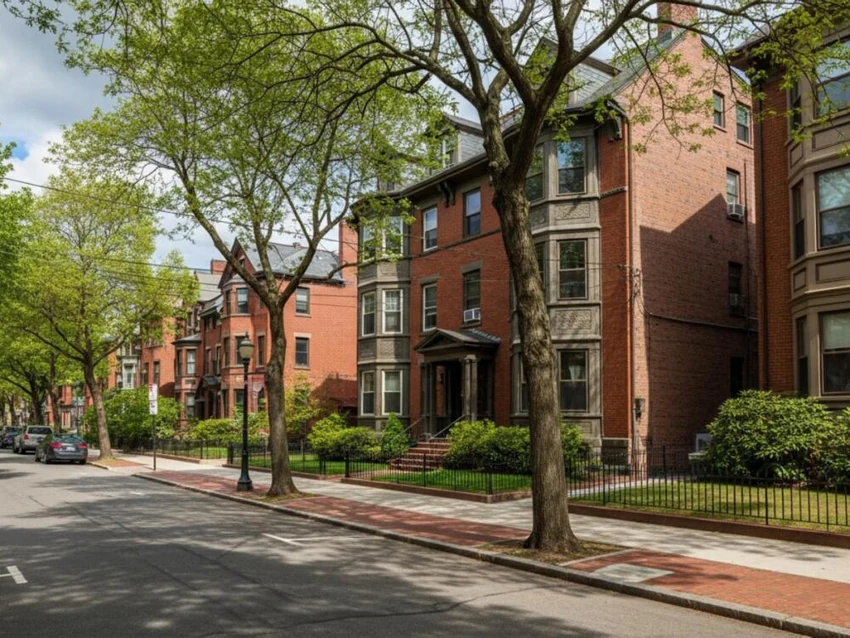
Looking statistically, the Brookline housing market is competitive and comes with a premium price tag, too. This is especially true for rent, which is approximately 73% higher than the national average.
But here’s the positive side. According to data from Apartments.com, rents in Brookline, MA, have decreased by 0.2% in the past year. In addition, rent prices also tend to drop around 3.4% between peak summer months and slower winter months (according to RentHop). So, timing your move can make a huge difference.
Here is a breakdown of the average rent in Brookline, Massachusetts, by apartment type:
| Apartment type | Average rent per month | Average size of the apartment |
|---|---|---|
| Studio | $2,741 | 392 sq. ft. |
| 1 bed | $3,196 | 711 sq. ft. |
| 2 beds | $3,927 | 1,020 sq. ft. |
| 3 beds | $4,559 | 1,365 sq. ft. |
Townhomes and condos have a slightly higher price range, depending on their average size. It’s also important to note that the figures above are based on a single study. Other studies may show different prices, and the figures are approximate values rather than fixed rates.
Transportation & Commuting from Brookline
One of the biggest advantages of living in Brookline is how easy it is to get around, even without your personal vehicle. Brookline’s transit options make commuting easier, whether you work in downtown Boston or need to travel to nearby areas
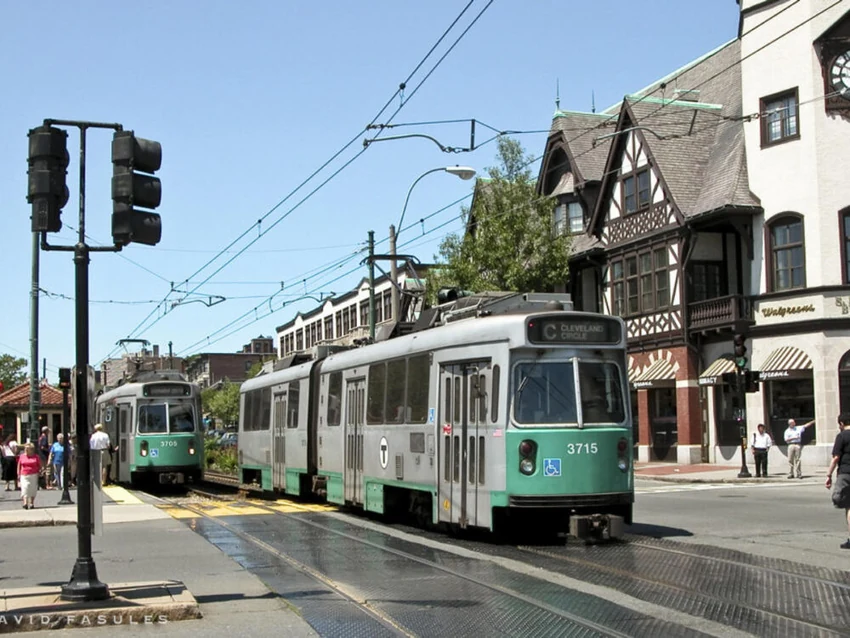
Getting Around on the MBTA Green Line
Think of the MBTA Green Line as the backbone of public transportation in Brookline. It’s served by the C and D branches of the Green Line. To simply understand:
- The C branch runs along Beacon Street, connecting Cleveland Circle to the Boston area via St. Mary’s Street, with multiple stops along the way.
- The D branch runs from Riverside through Reservoir toward downtown Boston, with stops at Reservoir, Beaconsfield, Brookline Hills, Brookline Village, and Longwood
If you live in North Brookline, you can access the B branch too, and if you are near Brookline Village, you can access the E branch.
Most trips to downtown Boston will take an average of 20–30 minutes, depending on your starting point and destination.
Driving and Public Transport in Brookline
Traffic, especially during rush hours, can be heavy if you’re considering driving to Boston. Parking is also often limited and expensive. For most people commuting from Brookline to Boston, taking the Green Line is quicker and cheaper than driving on your own.
Is Brookline Walkable?
Brookline is very walkable, and it is regarded as one of the most walkable and well-maintained places to explore on foot. Brookline has a Walk Score of 81, highlighting its accessibility. Neighborhoods like Washington Square, Coolidge Corner, and Brookline Village are often considered among the most walkable ones.
On the other hand, it is also a solid choice if you own a bike. It ranks as the third most bikeable city in Massachusetts, with a Bike Score of 74!
So, whether you plan to bike to work, walk to your coffee shop, or take the Green Line into the city, Brookline gives you practical options that reduce your dependency on a car.
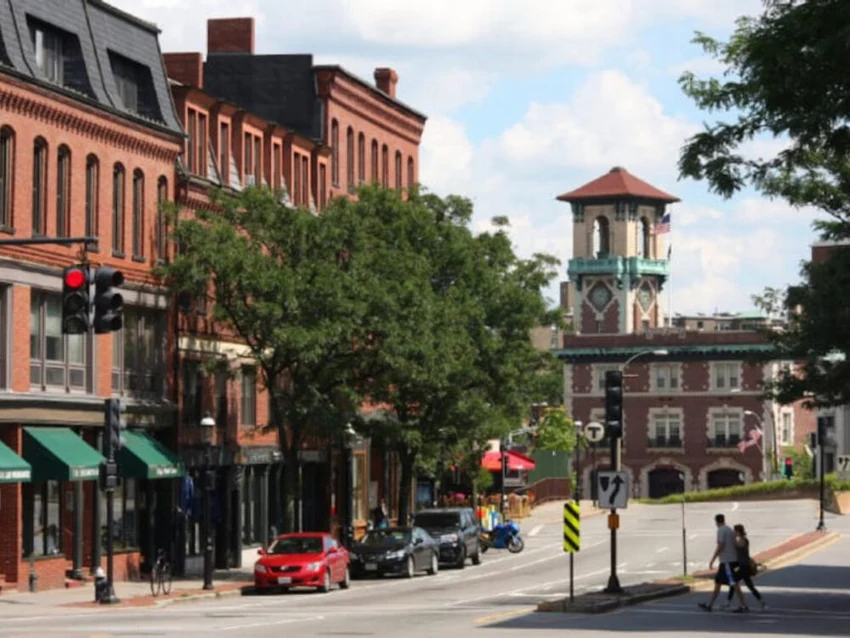
Pros and Cons of Living in Brookline
Often, people wonder – is Brookline, MA, a good place to live?
The answer is yes! However, just like any other place, it has advantages and disadvantages that you should consider, too.
Pros of Living in Brookline:
- ✔Brookline is one of the safest towns in Massachusetts.
- ✔A neighborhood feel with easy access to Boston.
- ✔An exceptional public school system makes it an ideal choice for families.
- ✔Excellent public transportation in Brookline, MA, via the Green Line.
Cons of Living in Brookline:
- ⚠Limited parking, especially in denser areas.
- ⚠Higher rent and overall cost of living.
- ⚠A competitive housing market.
Moving Tips for Relocating to Brookline
Planning your move to Brookline requires more than just packing your bags. When done the right way, it can save you a lot of stress. Here are some practical tips from our experts to help you prepare before your moving day in Brookline, MA.
- Plan your move around late fall or winter so you can get cheaper deals. Moving in summer (June to August) means you are moving during the busiest months. During the peak season, you will face higher moving rates and less availability.
- Avoid moving around September 1, as it is one of the most chaotic moving days in the Boston area. We have discussed it in detail in our guide to moving during peak season.
- Ensure that you contact the Brookline Transportation Division ahead of time to arrange a parking permit for the moving truck. This is extremely crucial and may be mandatory, depending on your situation. Apply at least a week in advance to avoid last-minute hassles.
- Plan your move early in the morning, if possible. This can help you avoid traffic buildup.
- Confirm elevator reservations if you are moving into an apartment building.
- Consider the narrow streets, as Brookline has tree-lined and narrow streets. These can be tricky for large trucks, so make sure to check your street ahead of time using Google Maps.
Another important thing to remember is that moving by yourself may not be the right fit for every situation. We have emphasized this in our guide on DIY vs. professional moving services, where our team broke down when you should go the DIY route and when you should opt for professional moving services.
Final Thoughts: Is Brookline Right for You?
Brookline may not be the most affordable place to live, but what you get in return is hard to find elsewhere. You enjoy excellent public transportation, strong schools, walkable neighborhoods, and a location that puts all of Boston within easy reach.
The key to moving to Brookline is being prepared. Learn about the Brookline housing market and plan your move early. And if you need help with the logistics, hiring a professional moving company that understands the local area will save you time and stress on moving day.


