

Moving into a new Boston apartment feels like solving a complex puzzle while racing against time. Imagine you’re juggling cardboard boxes on cobblestone streets, praying your couch fits through that century-old doorway. Sounds like something you don’t want to go through, right?
The city’s unique charm comes with equally unique moving challenges, from triple-deckers with no elevators to streets barely wide enough for a compact car, let alone a moving truck.
Often, you will find yourself battling for parking spots, navigating impossibly narrow alleys, and discovering your new building’s elevator is smaller than a phone booth. But don’t worry! This guide will help you conquer these hurdles with practical tips that’ll make your apartment move smoother.
9 Boston Apartment Moving Tips to Remember
Here are the tips to remember when you’re moving into a new Boston apartment.
Start Preparing As Early As You Can
Boston’s rental market moves faster than the Green Line during rush hour. So, you need to begin planning your move at least 8-10 weeks in advance. This timeline gives you breathing room to research moving companies, secure permits, and handle those surprise complications that Boston loves to throw your way.
Early preparation means you won’t find yourself scrambling for a moving truck on September 1st, when half the city is moving everywhere. And we’ve spoken a lot about how important it is to start early, even in our Boston moving checklist.
Make Elevator Reservations
Buildings often require elevator reservations to protect both residents and the building infrastructure. Most property managers understand that moving day creates chaos, so they implement reservation systems to keep things organized. You need to contact your building management 2–3 weeks in advance to secure your time slot. Most buildings charge between $50 and $200 for elevator holds and book specific time windows.
And if you skip this step, you might find yourself hauling that king-size mattress up five flights of stairs while your movers charge overtime rates. Some buildings will literally block your move without proper reservations, leaving you stranded on the sidewalk with all your belongings. Trust us, that $100 reservation fee suddenly seems like a bargain when you’re facing a six-story walk-up.
Walk Ups
Boston’s walk-up apartments are charming until moving day arrives. Those Instagram-worthy brownstones come with a hidden cost. Every piece of furniture needs to travel up multiple flights of narrow stairs. Plan for extra time and muscle power because moving up three flights takes significantly longer than ground-floor moves.
Consider hiring additional movers or recruiting friends early in your planning process. Break down large furniture beforehand and invest in furniture sliders to protect those beautiful hardwood floors.
In addition, schedule walk-up moves during cooler parts of the day because August heat plus multiple flights of stairs equals exhausted movers and potential damage to your belongings.
Also read: Best time of the year to move in Boston
Tackling Narrow Streets
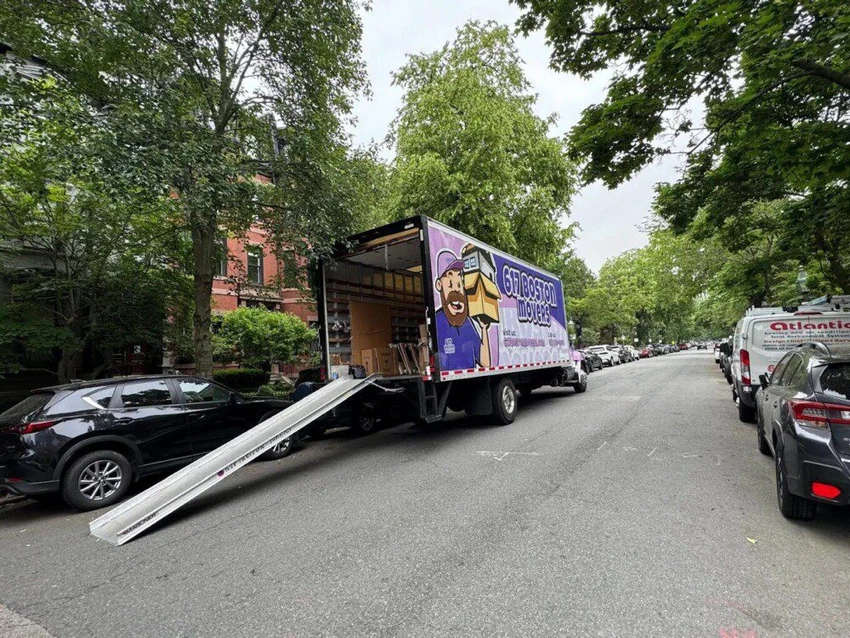
Boston’s historic streets weren’t designed for modern moving trucks. Streets like those in North End or Beacon Hill can barely accommodate a standard vehicle, let alone a 26-foot moving truck.
Picture this scenario: your moving truck gets wedged between parked cars, blocking traffic for hours while you frantically shuttle boxes by hand down three blocks. Traffic builds up, horns start honking, and suddenly your peaceful moving day turns into the talk of the town.
Therefore, research your route beforehand and measure street widths if necessary. Work with your moving company to use appropriately sized vehicles, or consider shuttle services that can navigate Boston’s quirky infrastructure.
Understand Your Moving Insurance
Moving insurance isn’t just another piece of paperwork. It’s your financial safety net when things go sideways. Boston’s tight spaces and challenging moves naturally increase the risk of accidents, making proper coverage essential rather than optional. Without adequate protection, you become personally responsible for any damage to your belongings, the building, or even injuries that occur during the move.
For instance, if your mover accidentally damages your landlord’s original hardwood floors while navigating your piano through a narrow doorway, without proper insurance coverage, you could face thousands in repair costs that come straight out of your security deposit and beyond.
So, understanding what’s covered, what’s excluded, and whether you need additional coverage for high-value items can save you from financial disaster.
Secure Parking
Boston parking is legendary for all the wrong reasons, and moving day shows every parking challenge the city can throw at you. Therefore, reserve a moving truck parking space through the city’s parking division at least one week ahead. This typically costs around $50-100 but prevents the nightmare scenario.
Some neighborhoods require resident permits for overnight parking, and regulations vary between areas. Remember, parking violations during moves can cost $100+ per ticket, and towing fees will completely derail your moving budget. The small upfront cost of reserving a proper parking space pays for itself in avoiding headaches and fees.
Keep Your Essential Items Accessible
Pack a “first day” survival kit with everything you’ll need when the unexpected happens. Include medications, phone chargers, basic tools, cleaning supplies, and comfort items that help you feel at home immediately. Boston apartment moves often involve surprise delays, whether it’s traffic snarls, permit complications, or discovering your new apartment key mysteriously doesn’t work.
Pack these items in a clearly labeled box or suitcase that travels with you in your car, not buried somewhere in the moving truck. When you’re exhausted and everything feels chaotic, knowing exactly where to find your phone charger and coffee maker becomes surprisingly comforting.
Enquire About The Building Rules
Contact building management well in advance to understand move-in procedures, restricted hours, required deposits, and any equipment limitations. Some buildings prohibit weekend moves entirely, while others require you to use specific entrances or mandate professional movers only.
Don’t forget to ask about utility setup procedures, mailbox access, and building amenities during your conversation. Nothing creates more frustration than discovering you can’t actually move in because the building requires a 48-hour advance notice for new resident setup. These conversations also help you understand your new community’s culture and expectations from day one.
Pack Smartly
Invest in quality packing materials because Boston’s unpredictable weather can turn cheap cardboard boxes into soggy disasters.

Ready to Make Your Boston Apartment Move Stress-Free? Don't Tackle This Challenge Alone!
617 Boston Movers brings years of experience to every move, understanding Boston’s quirks better than anyone else in the business. Our professional team handles everything from elevator reservations to navigating impossibly tight spaces, ensuring your belongings arrive safely at your new home.
Contact 617 Boston Movers today for a free quote and experience the difference that true local expertise makes.


