

Whenever you hire a Boston moving company, they’ll give you a moving contract before proceeding. The moving contract often appears foreign with so many complex terms mentioned inside.
When you blindly agree and sign without understanding your moving contract, you can face surprise price hikes or delays.
You don’t want to learn from your experience (at least from this one). Therefore, in this guide, we have broken down all the details of what a moving contract is, how to review and understand your moving contract, etc.
What Is a Moving Contract?
A moving contract is a legal agreement between you and the moving company. A moving contract is mandatory since it clearly lays down the responsibilities of your moving company, terms and conditions, etc.
A moving contract will also contain details of the payment, payment terms, services that are included in your move, and what will happen if something goes wrong.
Let’s take an example to understand a moving contract in simple terms. Let’s assume you are moving from Boston. Your moving contract specified that they will be packing your essentials. During the move, if one of your kitchen items breaks, your moving contact clearly states what claims can be made and the compensation you are entitled to receive.
Why Are Moving Contracts Important?
A moving contract plays a crucial role. Whether it’s a local or a long move, some of the essential reasons why moving contracts are important include:
Moving Contracts Offer Financial Transparency and Clarity
You don’t want to be surprised by sudden prices charged by the moving company. A moving contract lays down all the financial details, including the costs of moving, packing charges, any additional charges included, etc. Having transparency and an idea about the budget upfront will help you plan properly.
It Legally Protects You and The Moving Companies
Both you and the moving company are legally protected under a moving contract. Since it contains all the information, you can raise a claim in case of any dispute if it’s stated in your moving contract. On the other hand, it will also protect the moving company from false claims.
It States Liability and Insurance Coverage
Your contract defines all the details of what will happen if your items get lost or damaged during your moving period. Moving contract also shares details of what type of compensation is available, compensation limits and terms, and claim procedures. If you don’t have a moving contract, it becomes nearly impossible to get compensation.
Moving Contract States Service Standards
Your contract will define what quality of service you can expect. It includes pick and delivery timelines, how the handline process will look, customer service response times, etc. This also increases accountability within the moving company in Boston because once they know they’re bound by contract, they’re more likely to deliver the best service.
Key Terms Of a Moving Contract to Know
Here are some of the important key terms of the moving contract you should be aware of:
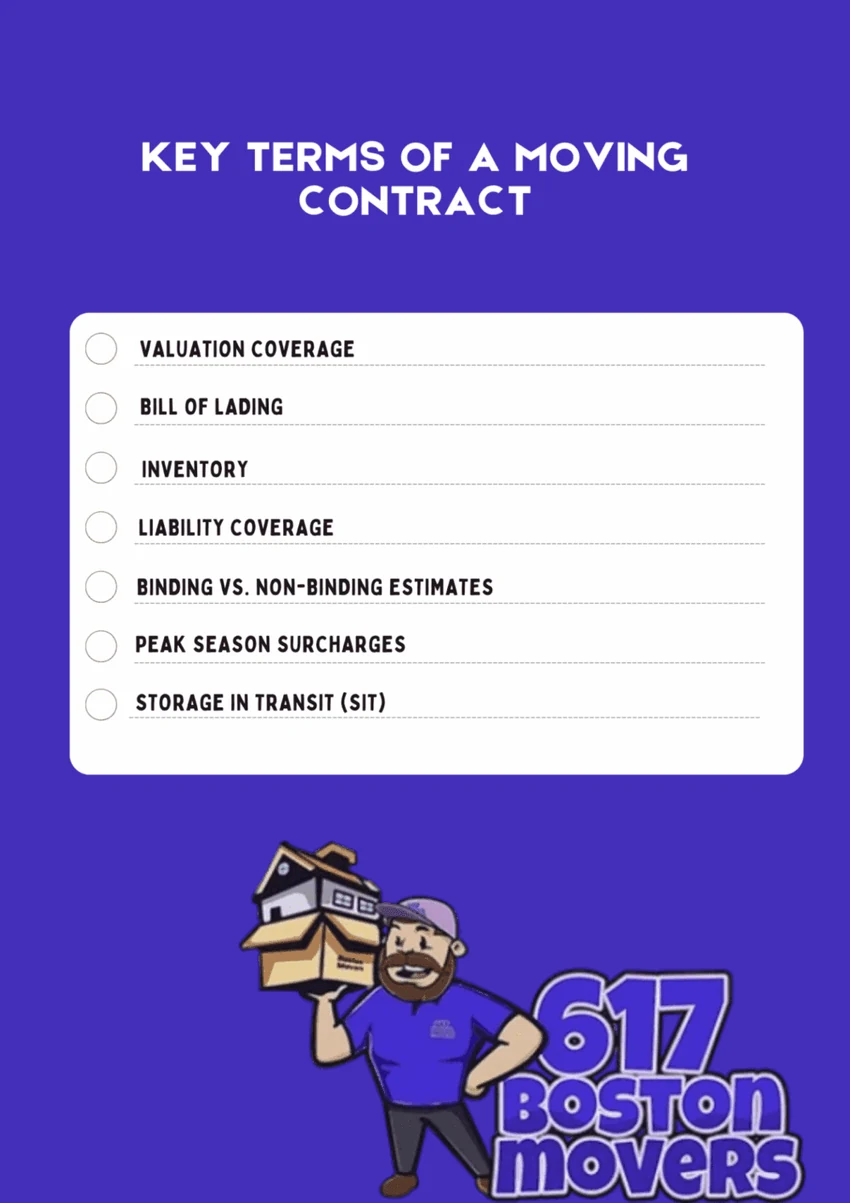
Valuation Coverage:
Your valuation coverage determines how much the company is liable to pay you in case they end up damaging any of your belongings. There are generally two types of valuation coverage:
- Full value protection: This covers replacement costs
- Released value protection: Offers minimum coverage
Bill of lading:
A bill of lading is one of the most important documents you will need during your move. It contains your receipt and contract rolled into one document. The reason why you need to keep this document with you is that you will need it if you’re going to file a claim (in the worst-case scenario) or to make a final check if things happened as per the agreed-upon contract.
Inventory:
In the context of moving, inventory refers to a detailed list of all the items you are going to move from your place to your new one. This is important for both – moving company and the individual who is moving.
Liability Coverage:
Liability coverage refers to the amount you are entitled to receive in case of any damage or any unforeseen circumstances. Read your liability coverage thoroughly, as you will come across all the terms and conditions and what you are entitled to.
Binding vs. Non-Binding Estimates:
The binding amount refers to the final cost that won’t exceed the quoted amount. On the other hand, non-binding estimates state that the price can change based on the service and weight of your belongings.
Peak Season Surcharges:
Usually, May to September is the peak moving season in Boston. During these months, moving companies in Boston usually charge more than usual. Your contract should include whether there will be peak season surcharges added. And if yes, the company should also label how much it will be.
Storage in Transit (SIT):
Storage in transit refers to the storage facility your moving company will provide in case your new home isn’t ready. The contract should include all the prices, limitations, duration, etc. Also, note that these are chargeable and are not included in your moving cost.
Factors to Check Before Signing a Contract
Whenever you are signing a moving contract, make sure you check these factors:
Analyze the Cost Breakdown:
Quotation amount and the actual amount will vary. When you get to the cost breakdown, review each line very carefully. Sometimes hidden charges are often overlooked by people, such as overtime pay, equipment rentals, fuel surcharges, etc. A good Boston moving company will break down each cost clearly, and if you have any questions, they will answer them.
Details of Company Licensing and Insurance Verification:
Check if your moving company in Boston holds proper state and federal licenses. Any interstate mover will need a USDOT number while local movers need state licensing. Also, ensure to check if the insurance coverage matches what’s written in the contract.
Learn more about moving insurance in Boston with our guide.
Timelines:
You need to thoroughly analyze that the contract states exact dates or at least timeframes for your move. If you notice language like “sometime next week,” consider it a red flag. It’s important to have a fair timeline and to consider various limitations such as parking restrictions and traffic when setting a schedule that protects both parties.
What If Your Moving Contract Has Issues?
It’s not uncommon to see that the moving contract has issues. Sometimes, it’s unintentional by the moving company. So, don’t panic if you see something off in the contract. Instead:
- Take pictures, keep your receipts, and communicate with your moving company in written format. Having everything documented will help you.
- Reach out to your moving company’s customer service first so that they can resolve the issue immediately.
- If direct communication fails, you can file a complaint directly with the Massachusetts Department of Public Utilities for local moves or the Federal Motor Carrier Safety Administration for interstate relocations.
Conclusion
Your moving contract is important for a successful relocation. Remember, a good contract protects you and the moving company by setting clear boundaries and maintaining transparency.
Our tip is to not rush when signing your moving contract. Go through each section carefully and do not hesitate to ask your moving company if you have any doubts.


